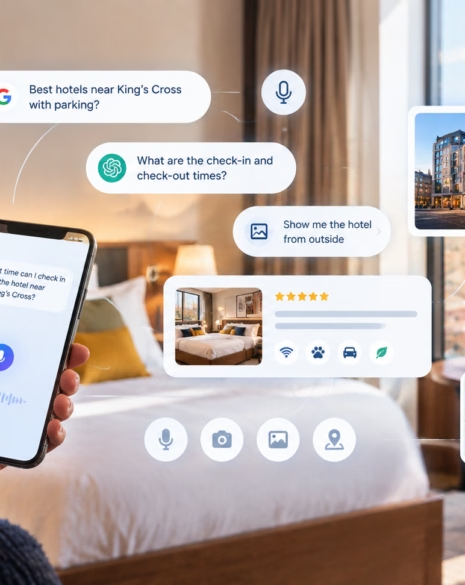
As search evolves, static descriptions are no longer enough. Travellers and AI systems increasingly seek content rooted in authentic experiences. It’s not just about listing amenities or proximity to landmarks — it’s about conveying what it feels like to stay at your hotel.
Experience-led hotel content uses real moments, team insight, and local detail to drive trust and visibility. It resonates with guests on an emotional level while delivering the clarity AI tools need to recommend your property with confidence.
This guide explores how to craft experience-rich content that connects meaningfully with your audience and supports modern SEO performance.
Why Experience-Led Content Ranks — and Converts
Travel search is no longer just keyword-based — it’s contextual. Potential guests are asking:
- “Where can I stay for a quiet, eco-conscious weekend with good coffee nearby?”
- “What’s Manchester like for solo travellers into independent shops and live music?”
To answer these, AI models prioritise content that demonstrates genuine, contextual relevance. Firsthand detail allows search engines to understand your property on a semantic level — transforming blog posts and landing pages into trusted, experience-rich sources.
Beyond visibility, this type of content builds emotional trust. It answers the deeper guest question: “Is this the right place for the kind of trip I want?”
Bring Content to Life with Real Guest Perspectives
One of the strongest ways to signal trust is to anchor content in real guest experiences. This goes beyond testimonials — it means weaving in genuinely observed or quoted moments that reflect real hospitality, always drawn from verified guest feedback rather than invented for the piece. A room description might reasonably draw on a real, approved guest comment about how quiet the upper floors are, or how the morning light comes into a particular room — but only where that observation actually exists and consent to use it has been given.
Practical ways to integrate this:
- Mention specific, consented guest scenarios in blogs and guides, sourced from genuine reviews or feedback the client has approved for use
- Tailor content to particular audience types — eco-minded travellers, solo guests, cultural explorers
- Use sensory detail that’s true to the property — morning light through the window, the aroma of coffee from the restaurant, the buzz of a nearby market
These cues are both AI-readable and emotionally engaging, provided every detail is something the property can actually stand behind.
Elevate Authority with Staff Expertise
Your team is one of your most valuable SEO assets. Their familiarity with the hotel and its surroundings makes them credible sources of curated, experience-led content — but only when the content genuinely comes from them.
Consider creating content formats that reflect real team perspectives, gathered directly from staff rather than written on their behalf, such as:
- A concierge’s actual itinerary suggestions for a specific type of visitor
- A chef’s real shortlist of dietary-friendly dining recommendations
- A housekeeping or sustainability team member’s genuine tips, credited to them
This strategy strengthens both discoverability and trust:
- It satisfies EEAT principles (expertise, experience, authoritativeness, and trust)
- It gives AI models strong attribution signals for factual accuracy
- It creates memorable, person-first narratives for human readers
This only works as a trust signal if the insight is real. Attributing an itinerary, recommendation or observation to a member of staff who wasn’t actually consulted undermines the same trust this approach is meant to build.
Write for Humans, Structure for Search
While tone should remain natural and human-first, structural clarity is key to gaining AI and search visibility.
Best practices include:
- Use clear H2 and H3 headings that align with natural queries
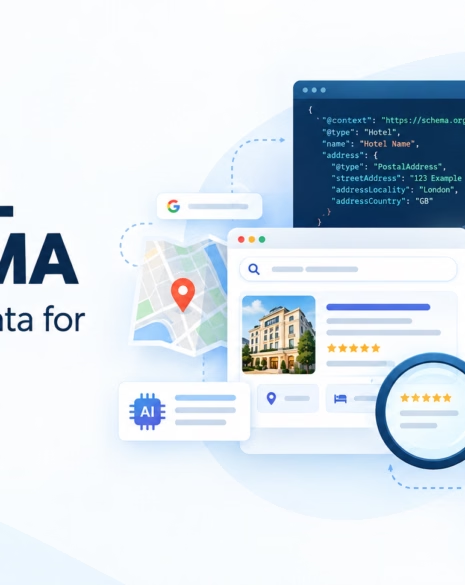
- Implement FAQPage schema where appropriate, answering genuine, common guest questions such as whether breakfast is included or what the best local attractions are
- Keep paragraphs short and digestible (3–5 sentences)
- Use precise, sensory language — avoid vague terms like “great location”
Instead of: “Our hotel is in a convenient area”
Say something specific and true to the property, such as: “Just a five-minute walk from the canal, guests can enjoy a waterside stroll before exploring independent cafés and boutiques nearby.”
These specific, well-structured phrases help both AI models and guests understand your offering clearly.
Connect Content to Onsite Services and Local Guides
Experience-led content performs best when connected to relevant landing pages that support bookings and navigation.
Some examples:
- A guide to creative weekends in a city should link to the property’s Rooms page
- A feature on eco-stays should reference the property’s own sustainability page, where one exists
- A blog for business travellers should guide readers to a Meetings & Conferences page
Adding external references, such as an official local tourism board, also supports credibility, giving context that AI tools and travellers trust.
Internal and external linking not only improves navigation and session depth but reinforces your hotel’s topical authority.
Conclusion: Content That Feels Real, Performs Better
Experience-led content isn’t just about storytelling — it’s a smart SEO strategy rooted in human detail and technical clarity. It allows your hotel to surface in richer search experiences while creating stronger emotional resonance with potential guests.
To recap, focus your content strategy on:
- Firsthand experience and sensory detail, always genuine and consented
- Real staff insight and local knowledge
- Structured formatting that supports AI parsing
- Clear internal links to services and landing pages
With this approach, your content becomes more than informational — it becomes memorable, shareable, and consistently recommended by both people and machines.