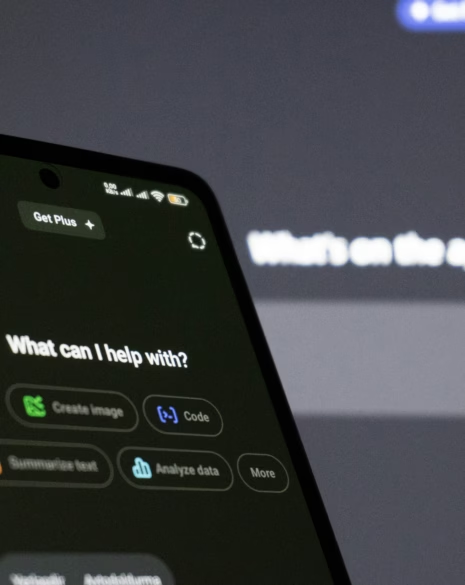
AI Overviews are changing how travellers search — and how hotels need to show up. With Google and other generative AI tools now summarising information from across the web, hospitality brands must think differently about how they structure and present content.
Instead of simply ranking for keywords, the goal is to be cited. To appear in AI-generated summaries, your hotel’s facts, language and content need to be accurate, visible, and machine-readable.
This guide breaks down how to improve your hotel’s chances of being featured in AI Overviews — and where to focus next.
What Are AI Overviews and Why Do They Matter?
AI Overviews are generative search responses. Instead of just listing links, search engines like Google now use large language models (LLMs) to create rich, paragraph-style summaries at the top of results pages. These draw on structured data, trusted content and third-party sources to deliver concise answers.
For hotels, this means:
- Your website might not get clicked — unless you’re cited directly.
- Your business details must be accurate, consistent, and easy for machines to understand.
- Traditional SEO is only part of the puzzle; entity SEO and structured content matter more than ever.
If a prospective guest searches “best eco-conscious hotel in Cornwall”, an AI Overview may generate a summary with 2–3 hotel names, snippets of reviews and booking availability — all without needing to click through to a site. Hotels that are clearly identified as sustainable, with structured evidence and strong online profiles, are more likely to be featured.
How AI Systems Decide What to Include
AI-generated results pull from sources the model deems trustworthy, relevant and clear. While we don’t have full visibility into Google’s systems, a few core patterns are emerging:
1. Entity Recognition and Knowledge Graph Inclusion
LLMs rely on structured “entities” — things like organisations, places and people — to create accurate outputs. If your hotel isn’t recognised as a distinct entity in platforms like Wikidata, it’s less likely to be cited.
To improve your hotel’s entity strength:
- Ensure your business has a complete and consistent Google Business Profile
- Claim or create a Wikidata entry, linking to your official site and social profiles
- Use consistent naming across all platforms and listings
2. Structured Data on Your Website
Google’s crawlers rely on schema markup (structured data) to understand what your website is saying. Hotel websites should be using schema types like:
- LocalBusiness or Hotel for core business details
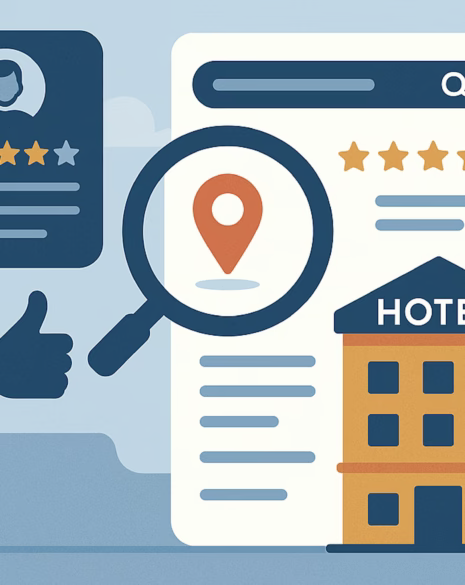
- Review and AggregateRating to signal guest satisfaction
- FAQPage for clear, question-based content
- Offer for room availability and pricing
A technical SEO audit can help identify what’s missing. See our Technical SEO content and Hotel Website Audit page for practical guides.
3. External Validation and Citations
AI Overviews are unlikely to cite only your site. Reviews, news coverage, and listings on trusted platforms all strengthen your presence. Make sure your hotel is visible — and consistently described — on sources like:
- Google Maps and Business Profile
- Tripadvisor and major OTAs
- Press features and blog mentions
You can use tools like Google’s Structured Data Testing Tool to see how well your site is marked up.
Writing Content That AI Recognises
Beyond structure, your content must speak the language of AI search. Here’s how:
Align with Search Intent
Use natural, human-centred language. Anticipate what guests might search — “Is this hotel pet-friendly?” or “What time is check-in?” — and answer clearly, preferably in short paragraphs or bulleted sections.
Add Supporting Evidence
Where possible, include quotes from reviews, stats about your sustainability practices, or awards your property has won. These give AI more context to summarise and cite.
Keep It Consistent
Ensure your NAP (name, address, phone number) data matches everywhere. Small inconsistencies can confuse LLMs and weaken your authority.
Where to Focus First
If your goal is to be visible in AI-generated summaries, start with:
- Schema Markup
Use a full set of schema types, especially Hotel, Review, Offer and FAQPage. - Entity Consistency
Align your business name and details across Google, Wikidata, and major directories. - High-Authority Listings
Ensure your property is accurately represented on platforms that AI models trust. - Clear, Structured Content
Add FAQs, explain your unique selling points, and include factual, verifiable data throughout.
Conclusion: Visibility in a Post-Click World
The hospitality search landscape is evolving fast. AI Overviews are shifting guest behaviour, reducing clicks and pushing top-performing content to the very top of the funnel. The hotels that succeed won’t just be optimised for keywords — they’ll be recognised as trusted entities with machine-readable proof.
Take action now by reviewing your structured data, aligning your content with entity SEO, and building a credible, consistent digital footprint.
For more guidance, explore our Hospitality SEO Services, Case Studies or visit the SEO Resources hub.