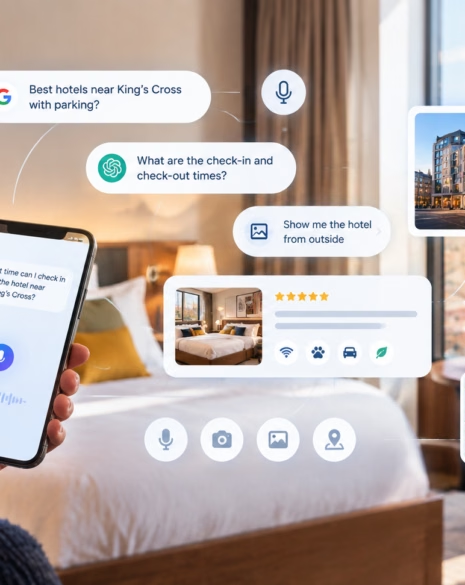
When prospective guests search for your hotel, they’re not just looking at prices or photos. They’re assessing how reliable, reputable, and relevant your brand appears before they ever click. While reviews and imagery certainly matter, there’s a technical factor that plays a critical role behind the scenes: schema markup.
Schema is structured data embedded within your website’s code that helps search engines interpret your content with greater clarity. For hotels, it’s one of the most effective ways to improve online visibility, build trust at the point of search, and present verified information in a consistent, Google-friendly format.
This article explores how using structured data — particularly Review, LocalBusiness, and Product schema — can enhance your digital reputation, elevate your listings, and drive more direct bookings.
What Is Schema Markup and Why Is It Crucial for Hotels?
Schema markup is a form of code that explains your content’s meaning to search engines. While humans can infer that a “Deluxe Suite” is a room type, search engines need structured context. Schema provides that context, improving how your hotel is displayed in search results.
When properly implemented, schema can trigger rich results — enhanced listings that show star ratings, review counts, pricing, and other key trust signals directly in the SERP. For hotels, this visibility can:
- Improve click-through rates
- Reinforce brand credibility
- Increase direct traffic
- Support online reputation management (ORM) strategies
In short, schema helps search engines understand — and highlight — what makes your hotel worth booking.
Review Schema: Showcasing Guest Feedback Where It Matters Most
Reviews are one of the most powerful trust drivers in hospitality. However, many hotels miss the opportunity to present them prominently in organic search.
By applying Review schema to on-page guest feedback, you enable Google to display average ratings, review counts, and publication dates directly in your search result snippet. This adds:
- Immediate trust signals
- Social proof without requiring a click
- Stronger presence against OTA listings
According to internal booking data from multiple hotel brands, listings with review-rich snippets can experience up to 35% higher click-through rates compared to standard text-only results.
📍Ensure that reviews marked up with schema are hosted on your own domain, publicly visible, and not pulled in from third-party widgets.
Example internal page to mark up: /guest-reviews
LocalBusiness Schema: Help Google Understand Where You Are
Google’s local ranking algorithm prioritises proximity, relevance, and prominence. By using LocalBusiness schema (or the more specific Hotel schema subtype), you clearly define your property’s:
- Name, address, and contact number (NAP)
- Business category
- Geo-coordinates
- Service areas or neighbourhood references
This clarity helps Google better understand your location and match your property to “near me” or destination-specific searches.
📍Make sure the structured data matches your Google Business Profile exactly — even small discrepancies in address formatting can reduce trust signals.
Suggested internal page: /location or /contact-us
Product Schema: Structuring the Rooms and Offers You Sell
Every room type, package, and experience at your hotel is a product. Using Product schema allows you to label these clearly, giving search engines detailed information on:
- Room names and descriptions
- Pricing and availability
- Booking URLs
- Images and star ratings
This data supports inclusion in future-forward search formats, such as Google’s evolving Search Generative Experience (SGE), which relies heavily on structured product and offer data to generate travel previews.
Example internal page: /rooms-and-suites
Why Schema Builds Trust in AI-Powered Search
Google is shifting from traditional keyword results to AI-generated overviews and conversational answers. Schema markup provides the machine-readable context that powers these summaries.
By structuring your reviews, business details, and offerings with schema, you position your hotel to be featured more prominently in:
- Featured snippets
- Generative overviews
- Local discovery panels
It’s no longer just about being found — it’s about being presented well. Structured data plays a foundational role in how your brand is surfaced and perceived across emerging AI-driven platforms.
Implementation Best Practices for Hotels
Not every schema type applies equally to every property. Start with the following high-impact schema types:
| Schema Type | Purpose | Best Use Case |
| Hotel | Full business profile | Homepage, About, Contact |
| Review | Star ratings, guest comments | Testimonials or Reviews pages |
| Product | Rooms, packages, spa treatments | Room listings, Offers, Experiences |
| LocalBusiness | Address, map data, phone number | Footer, Contact, GMB-integrated pages |
Use Google’s Rich Results Test to validate your implementation. Errors or mismatched data can result in suppressed visibility or ineligibility for rich snippets.
📍Keep all schema updated. If your room rates change seasonally or a package ends, outdated markup can harm your performance and accuracy scores.
Integrate Schema Into a Broader SEO Strategy
Structured data works best when combined with solid content, internal linking, and clear UX. Link schema-marked pages to:
- A local area guide to reinforce location relevance
- A booking engine page that reflects structured room offerings
- A reviews or testimonials section to validate user experience
This approach builds topical authority and ensures schema doesn’t live in isolation but supports the full user journey from search to booking.
Conclusion: Schema Is Your Silent Brand Ambassador
In the hospitality sector, perception drives conversion. Schema isn’t just a technical enhancement — it’s a storytelling tool that helps search engines communicate your hotel’s value clearly and consistently.
By implementing key schema types — and maintaining their accuracy — you enhance your reputation, boost your visibility, and give your hotel the best chance to stand out across every stage of the digital booking journey.
Take the next step.
Audit your current site for structured data. Prioritise reviews, room listings, and local relevance. If you don’t have the internal resource to manage schema, consider bringing in a hospitality-focused technical SEO partner who understands both the tech and the guest mindset.