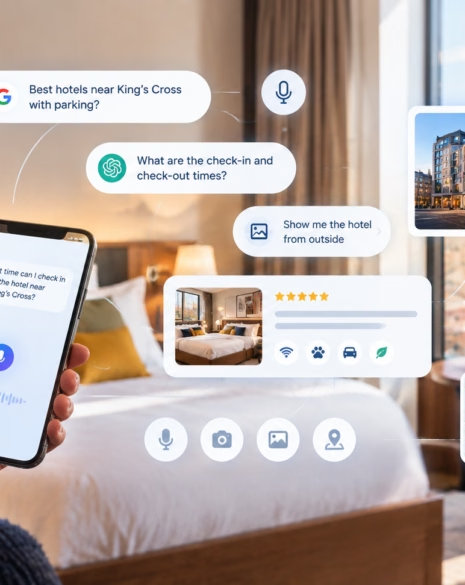
In an increasingly AI-led search landscape, hotel content must go beyond aesthetic appeal — it must be structured for performance. As Google evolves towards generative search and semantic understanding, content visibility depends on how well it answers intent-led queries in a format that both search engines and travellers trust.
For hospitality marketers, this means adopting content frameworks that do more than tell a story — they create relevance, build authority, and support technical SEO.
This guide explores five high-performing content structures that help hotels rank, convert, and stay visible across both traditional and AI-powered search environments.
Why Structured Content Outperforms
Modern search engines assess not only what content says, but how it’s presented. Google’s Search Generative Experience (SGE) and AI-summarised results prioritise clarity, reliability, and well-structured information. This makes formatting as critical as messaging.
Content frameworks help hotels:
- Align with search intent
- Increase crawlability and understanding
- Earn featured snippets and rich results
- Strengthen topical relevance and internal SEO signals
Ultimately, structure enhances both discoverability and trust — for search engines and future guests.
Framework 1: The Destination Guide Format
A well-crafted destination guide meets high-volume, discovery-stage search intent while subtly positioning your hotel as the best local option.
Recommended Structure
- Local area introduction with relevance to your guest demographic
- Themed sections: attractions, activities, dining
- Travel logistics: how to get there, local tips
- Accommodation suggestion with a lead-in to your property
- Internal links to Rooms & Suites, Dining, and Location
Why It Performs
Search queries like:
- “Things to do near Paddington”
- “Best weekend break in Camden”
- “Where to stay near Euston Station”
are highly contextual and often served AI-generated responses. This format captures those queries by offering a comprehensive, structured, and human-focused guide that also ranks organically.
Framework 2: The Seasonal Campaign Hub
Seasonal hubs are evergreen landing pages that centralise content for events, offers, and guest interest around a specific time of year.
Recommended Structure
- Introduction: Why the season matters to your guests
- Local events or experiences with dates
- Highlighted offers or packages
- CTAs to Book Now or Special Offers
- Internal links to What’s On or Area Guides
Why It Performs
These pages are reusable, refreshable, and linkable — ideal for securing backlinks and maintaining visibility year-on-year. Their structure makes them strong contenders for seasonal and event-based search traffic.
Framework 3: The Hotel FAQ Page (with Schema)
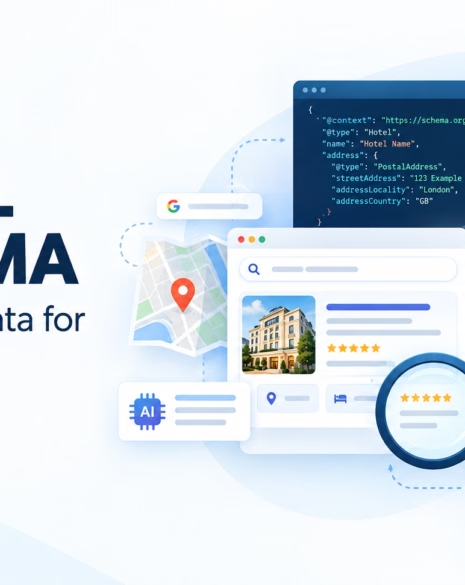
A dedicated FAQ page, structured with FAQPage schema, improves UX and unlocks rich results in search.
Recommended Structure
- FAQs grouped by category: rooms, amenities, location, policies
- Clear answers written for both humans and voice search
- Structured data implementation for Google visibility
Example questions:
- What time is check-in and check-out?
- Does the hotel have parking?
- Is breakfast included in every rate?
Why It Performs
FAQs serve multiple intents — informational, navigational, and transactional — while improving site structure and conversion. They’re also commonly pulled into snippets and AI answers.
Authoritative Source:
https://developers.google.com/search/docs/appearance/structured-data/faqpage
Framework 4: Experience-Led Blog Series
Blogs that blend storytelling with service positioning perform especially well in the hospitality space.
Recommended Structure
- Personalised intro (e.g. guest story or concierge recommendation)
- Highlights of guest experiences or local exploration
- Internal CTAs to rooms, packages, or dining pages
Example content:
- “48 Hours in Central London: Where to Stay, Eat and Explore”
- “Our Concierge’s Top 5 Hidden Spots in Camden”
- “How Our Sustainability Ethos Shapes Every Guest Stay”
Why It Performs
Experience-led blogs align with conversational, long-tail queries — often favoured by AI-generated responses. They’re also ideal for internal linking to Our Story, Sustainability, or Team pages.
Framework 5: Topic Clusters and Content Pillars
Building topical authority around themes like eco-travel, business stays, or local culture requires depth — not just breadth.
Recommended Structure
- Core pillar page: long-form, intent-matching, and evergreen
- Supporting articles exploring related angles
- Strategic internal linking across all assets
For example:
- Pillar: “Your Guide to Sustainable Hotels in London”
- Cluster: “Eco Tips for Travellers”, “Our Green Initiatives”, “Why Guests Choose Low-Impact Stays”
Why It Performs
This approach signals relevance to search engines and AI systems through content relationships. Clusters also increase time-on-site and help guests navigate their interests through your brand’s expertise.
Use a Blog Hub or Insights Library to house these clusters for improved navigation and SEO.
Conclusion: Frameworks That Serve Both Search and Guests
In modern SEO, structure is strategy. Adopting frameworks like destination guides, seasonal hubs, structured FAQs, and content pillars ensures your hotel doesn’t just publish — it performs.
These formats improve visibility, build authority, and enhance guest engagement across organic, AI, and voice-led discovery channels.
Looking to optimise your content for search and conversion?
Start by auditing your current content structure. Identify where your pages could be clearer, more connected, or more aligned with guest search behaviour — and apply these proven frameworks to turn visibility into bookings.