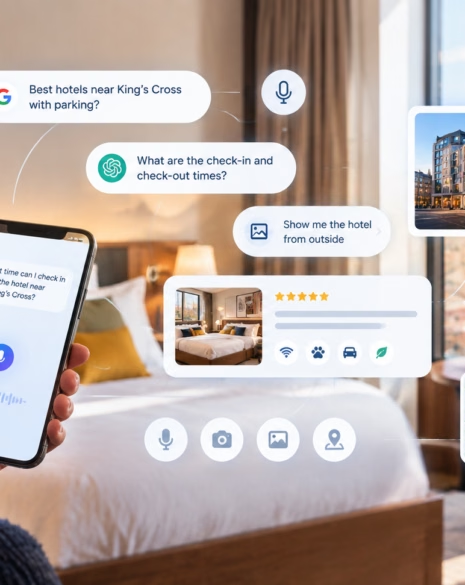
In today’s fast-moving hotel marketing landscape, technical SEO is no longer a niche concern for developers—it plays a critical role in driving visibility, site performance, and conversions. As the demands of technical optimisation increase, hospitality teams are turning to AI tools to streamline and scale their efforts.
From generating schema markup to analysing log files, AI copilots are transforming how hotel marketers approach SEO. This guide explores practical, real-world applications of AI for technical SEO in hospitality – helping teams work smarter, faster, and more effectively.
Why technical SEO matters in hospitality
Technical SEO forms the foundation for how search engines crawl, interpret, and rank your hotel website. While largely invisible to users, it’s essential for:
- Site speed and Core Web Vitals
- Structured data (schema markup)
- Crawlability and indexing
- Mobile usability and accessibility
Even the best content and backlinks will underperform if your technical SEO is lacking. That’s why scalable solutions, like AI, are becoming indispensable.
Generating schema markup with AI
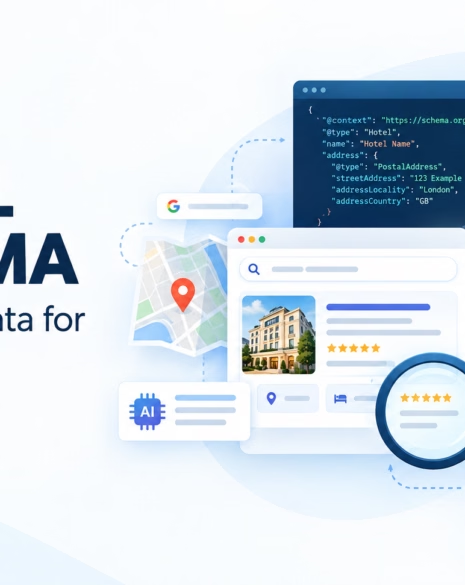
Schema markup helps search engines understand your content and context. For hotels, this includes annotating room types, amenities, offers, location data, and reviews. Done correctly, it can boost your presence in Knowledge Panels, featured snippets, and other enhanced search features.
Traditionally, creating schema requires manual coding or developer input. AI now allows marketers to:
- Instantly generate Hotel, LocalBusiness, Product, and FAQPage schema
- Extract and structure data from existing page content
- Validate markup using tools like Google’s Rich Results Test
For example, a marketer at a hotel could use an AI prompt such as: “Generate JSON-LD for a hotel room offering with EV charging and free breakfast in Notting Hill.” The AI would return clean, ready-to-implement schema.
External source: https://developers.google.com/search/docs/appearance/structured-data/hotel
Using AI to analyse server logs and crawl data
Log files show how search engines interact with your site: which pages are crawled most often, where errors occur, and how bots handle redirects. Manually parsing these logs is time-intensive.
AI tools make it easier to:
- Summarise crawl activity
- Detect crawl budget inefficiencies
- Identify 404 errors, redirect chains, and orphaned pages
By feeding logs into AI tools with natural language processing, hotel marketers can simply ask:
“Which room pages are crawled less frequently than the homepage?”
“Are there any redirect chains affecting the offers section?”
This delivers actionable insights in seconds, no technical background required.
AI support for Core Web Vitals and page performance
Google’s Core Web Vitals: LCP, FID, and CLS, are key ranking factors that measure real user experience. While developers usually lead performance improvements, marketers can now use AI to:
- Identify slow-loading templates
- Simulate performance across devices
- Generate clear optimisation suggestions
For instance, an AI tool could flag that the Rooms Overview page has a slow “Largest Contentful Paint” due to large hero images. It may then suggest compressing images or implementing lazy loading.
Implementing How-To schema and FAQs with AI prompts
Many hotels publish FAQs, help articles, or internal guides – ideal opportunities for FAQPage and HowTo schema markup. Rather than manually writing JSON-LD, marketers can now:
- Turn guest queries into structured FAQ content
- Generate How-To schema for tasks like “How to check in after hours”
- Apply consistent schema across blog and support content
This structured content should link naturally to internal knowledge hubs, such as:
- Technical SEO (used here to explain back-end optimisations)
- Policy pages or Offers
- Blog posts that address common guest concerns
Conclusion: Smarter SEO through AI integration
AI is not a replacement for human strategy, but it does enhance technical SEO efforts. In hospitality, the most effective teams use AI to support schema generation, log analysis, Core Web Vitals, and structured content creation.
By combining these efficiencies with expert insight, hotels can stay ahead of algorithm changes while improving speed, accuracy, and user experience.
Curious how your hotel can scale technical SEO with AI tools?