Location pages have never been the most exciting part of a hotel website. They sit quietly in the navigation, rarely get the same attention as rooms pages or offers, and tend to be updated only when someone notices they’re out of date. In some cases, they’re barely there at all — a paragraph about being “close to all major attractions” and a Google Maps embed.
That needs to change.
As AI search becomes a bigger part of how travellers discover and evaluate hotels, location pages have moved from a nice-to-have to one of the most strategically important pages on your site. Here’s why.
AI search relies on specificity, not vagueness
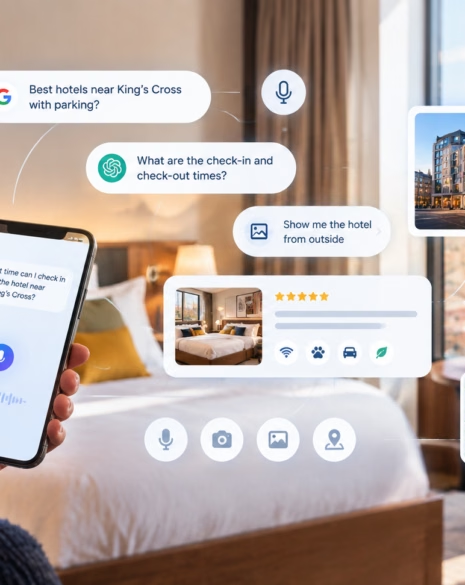
When someone asks an AI platform “which hotel is best for exploring the Cotswolds by car?” or “where should I stay if I want to walk to the Royal Albert Hall?”, the AI needs to make a confident recommendation. To do that, it looks for evidence. It wants to find clear, specific, verifiable information that connects a hotel to a place, a trip type, and a guest need.
A location page that says “our hotel is ideally situated for everything London has to offer” gives AI nothing to work with. A page that clearly describes which neighbourhood you’re in, what’s nearby and on foot, what guests typically come to do, and how they get around — that’s the kind of content AI can actually use.
The more specific your location content, the easier it is for AI systems to match your hotel to the right search intent. Vague positioning makes that harder.
They carry different weight in traditional search too
Zero-click behaviour is rising. AI Overviews are taking up more of the results page. The click-through rate for many generic “hotels in X” searches has declined. But location-based searches — particularly longer, more specific queries — still drive qualified traffic to hotel websites.
A well-structured location page targets the kind of search intent that converts. Someone searching for “serviced apartments near Green Park London” or “hotel in Chipping Campden for Cheltenham Festival” is not casually browsing. They have a specific need and they’re looking for a match. A location page that directly addresses that query — with real, specific information rather than marketing copy — will perform better than a generic page that tries to appeal to everyone.
Specificity is what separates location pages that rank from those that don’t.
Location pages shape your AI shadow
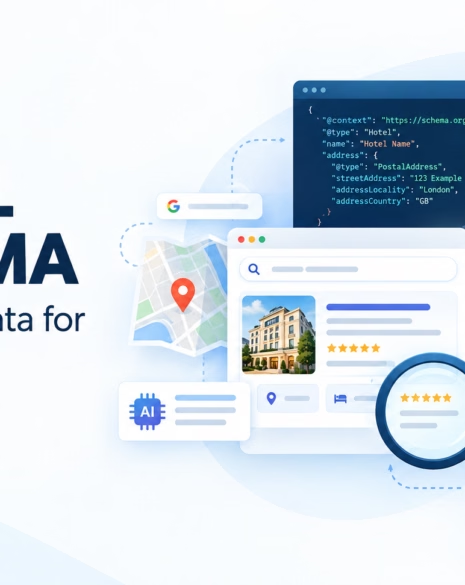
We talk a lot about the concept of the AI shadow — the interpretation of your hotel that AI platforms construct from everything they can find about you online. Your website is a major input into that shadow. And location pages are one of the clearest signals on your site about what kind of hotel you are and who you’re for.
If your location content is thin, AI has less to draw on. It may fall back on OTA descriptions, review snippets, or third-party directory text — none of which you control. A well-developed location page gives AI something authoritative, consistent, and strategically framed to work from.
That matters more than most hotels realise. Guests who encounter your AI shadow before ever visiting your website will have already formed an impression. The quality of your location content is one of the things that shapes whether that impression is accurate and positive.
What a strong location page actually looks like
The basics are well understood: your neighbourhood, transport links, what’s nearby. But the hotels that get the most from location pages go further than that.
A strong location page answers the real questions a guest has before they decide to book. Not just “where are you?” but “what is it like to be based here?”, “can I get around easily without a car?”, “what would I actually do in the evenings?”, “is this area right for the trip I’m planning?”
It’s also worth thinking about who the page is for. A business traveller staying near a city centre for a conference has different priorities from a couple visiting for a birthday weekend. A family exploring a national park has different questions from a guest attending a specific event. Location pages can be written to speak to one primary use case while remaining broadly relevant — and that specificity is exactly what improves both search performance and AI citation.
What to include:
- A clear, specific description of the immediate area (not generic superlatives)
- Verified nearby points of interest, with honest framing rather than inflated claims
- Practical information about transport and getting around
- A sense of what the neighbourhood feels like and who it suits
- Internal links to relevant pages (rooms, offers, contact) where appropriate
What to avoid:
- Invented or unverified distances and travel times
- Generic phrases that could apply to any hotel anywhere
- Filler content that adds word count without adding value
They support your wider content strategy
Location pages don’t sit in isolation. They’re the anchor for a wider cluster of content — blog posts about local events, area guides, things to do nearby, seasonal recommendations. That cluster builds topical authority around the hotel’s location, which matters both for traditional search and for AI systems evaluating how credible and useful your site is on a given topic.
A hotel with a strong location page and supporting cluster of local content looks authoritative on its area. AI systems respond to that. So do travellers.
If your location page is thin, the cluster built around it will be weaker too. Get the foundation right first.
Now is the right time to audit them
Most hotel websites have location pages that were written several years ago and haven’t been touched since. The information may be broadly accurate, but the content isn’t structured for the way search and AI work today.
Reviewing your location pages doesn’t require a full site rebuild. It’s a focused piece of work with a clear return. Update the specifics, sharpen the positioning, structure the content so AI can extract and use it, and make sure what’s there is accurate and genuinely useful to the guest.
In the age of AI search, every page on your website is a potential data source for the systems that describe your hotel to future guests. Location pages are one of the highest-leverage places to start.