Most hotel marketing teams look at search data the wrong way round. They check rankings after a campaign has run, review traffic once a month is over, and ask why occupancy underperformed in August sometime in September. The data that could have changed those outcomes was available months earlier, and nobody was reading it in time to do anything useful.
Summer is the clearest example of this in hospitality. The search patterns that predict peak season behaviour are visible in April and May, often earlier. Hotels that understand what those signals mean, and act on them before demand peaks, are in a structurally different position to those that wait for summer to arrive and then respond to it.
What search data is actually telling you in spring
Search volume for hospitality terms doesn’t rise uniformly or suddenly. It builds in waves, and each wave has a different character.
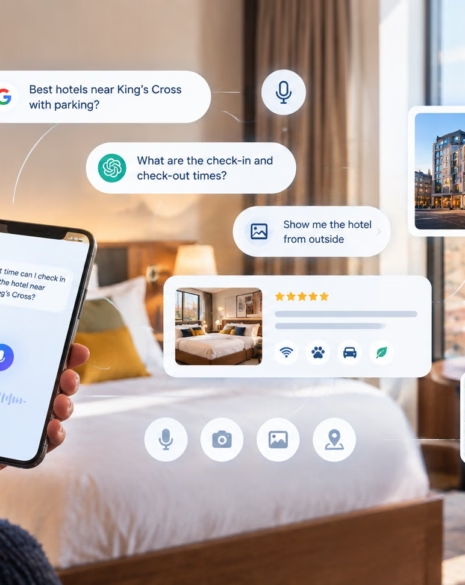
The first wave is typically informational: people thinking about summer trips before they’ve committed to anything. Queries like “things to do in [destination] in summer” or “best time to visit [location]” appear weeks or months before transactional demand picks up. These searches indicate intent that hasn’t crystallised yet. For hotels, this is the window to occupy the informational space, answer the questions being asked, and put the property in front of people who are still deciding.
The second wave is commercial: destination shortlisting, comparisons, “best hotel for [occasion/group type]” searches. This is where guests are narrowing down. Hotels that are already present in this layer, through well-structured content, solid entity signals, and consistent review presence, get evaluated. Hotels that aren’t visible at this stage rarely recover it later in the conversion journey.
The third wave is transactional: specific dates, specific properties, direct booking intent. By this point, the decision is largely made. Competing here is harder and more expensive.
The mistake most hotels make is treating all three waves the same, targeting the same content and the same budget at all three stages simultaneously. Understanding which wave is building, and calibrating accordingly, is one of the more reliable ways to improve summer performance without increasing spend.
How to read what the data is showing you
Google Search Console is the most underused tool in most hotel marketing stacks. The data it surfaces, specifically the impressions, clicks and average position for the queries a hotel already ranks for, is a direct read on where the property sits in the search landscape at any given point.
Running a comparison of April and May impressions against the same period in the previous year reveals whether search interest in the hotel’s destination is growing, flat or declining relative to where it was twelve months ago. It also reveals which queries are generating impressions without generating clicks, which is one of the cleaner indicators of content that’s visible but not compelling enough to drive action.
Keyword research tools add a forward-looking layer. Month-on-month search volume data for destination and experience terms shows what guests are beginning to search for before the searches become high-competition. Spotting a rising trend in queries like “summer walking breaks [county]” or “coastal hotel with pool [region]” in March gives a hotel time to produce or optimise content before that demand peaks.
The combination of these two data sources, what the hotel is already being found for and what is beginning to be searched for, gives a clearer picture of the opportunity than either alone.
Where hotels most commonly leave gap in summer search
Three patterns come up repeatedly when auditing hotel search performance before peak season.
The first is underinvestment in experience-led content. Rooms pages tend to be well-maintained. But the content that answers the questions people are actually asking in spring, “what is there to do near [hotel]”, “is [destination] good for a group of friends”, “what’s the food like in [town]” is often thin, outdated or missing entirely. This is the layer that AI Overviews and AI search results draw from heavily, and it’s the layer that influences guests during the informational and commercial waves before they’ve decided where to book.
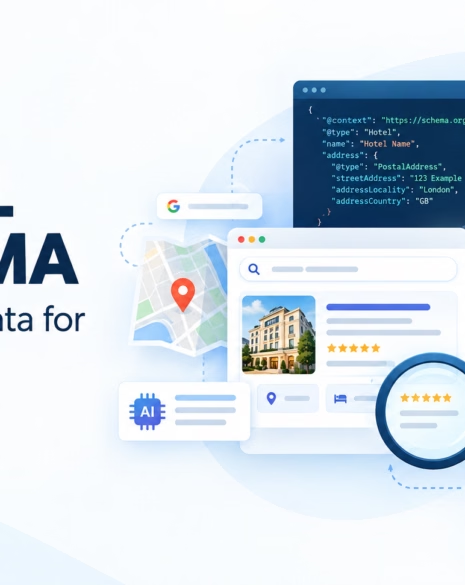
The second is inconsistent entity signals. If a hotel’s name, address, category and attributes are described differently across the website, Google Business Profile, OTAs and key directories, search engines and AI systems have less confidence in the property. That uncertainty reduces the likelihood of being surfaced in competitive queries during peak season, when the volume of competing signals is highest.
The third is reactive rather than proactive content timing. Summer blog content published in July serves July visitors, most of whom have already decided where they’re going. The same content published in April reaches people still in the research phase, when it can actually influence the decision. Timing matters more than most hotel marketing calendars reflect.
What to do with this before peak season
The practical output of a summer search audit isn’t a new campaign. It’s a short list of targeted actions: content gaps to close, entity inconsistencies to resolve, existing pages to update or consolidate, and a clear view of which queries are worth competing for more deliberately.
For most hotels, that list is shorter than expected and more actionable than a full strategy overhaul. A rooms page that hasn’t been updated since 2023. A location page that doesn’t reflect the experiences guests are actually searching for. A Google Business Profile that’s missing attributes or carrying a category mismatch. These are fixable in weeks, not quarters, and they affect performance across the entire peak season rather than a single campaign.
The window before summer is the most valuable one in the hospitality marketing calendar for exactly this reason. The searches are rising, the decisions haven’t been made yet, and the hotels that show up clearly and credibly in that period earn a disproportionate share of what follows.
If you’d like a clearer picture of where your property sits in summer search before peak season starts, Formula works with hotels on exactly this kind of strategic audit. Get in touch at thisisformula.com/contact.
For more on the content and entity foundations that underpin strong seasonal performance, the Formula Insights library covers the key areas in detail.