In an industry as dynamic as hospitality, visibility in search is critical. When a hotel website experiences a sudden ranking drop after a core algorithm update, it can feel like the ground has shifted overnight. These updates are not penalties; they are recalibrations. With the right recovery framework, your hotel site can regain lost ground and become more resilient.
This guide outlines a structured, experience-led approach to hotel SEO recovery following an algorithm shift, aligned with how modern search engines and AI assess online content.
Understanding Algorithm Shifts and Core Updates
Google’s core updates introduce broad changes to how it evaluates content quality, trust signals, and relevance. These updates are designed to enhance the overall usefulness of search results. For hotel websites, this often means Google now:
- Places higher value on original, experience-led content
- Prioritises structured data and entity clarity
- Expects stronger E-E-A-T signals (Experience, Expertise, Authoritativeness, Trustworthiness)
A ranking drop doesn’t necessarily indicate poor quality. It may mean that other sites now better align with updated ranking criteria. The solution is to realign.
Step 1: Run a Structured SEO Audit
Clarity begins with a comprehensive audit. Use a structured framework to determine what changed and where gaps now exist.
Key focus areas:
- Technical SEO: Check crawlability, indexing, mobile performance, and Core Web Vitals
- Content quality: Review originality, topic coverage, and internal linking
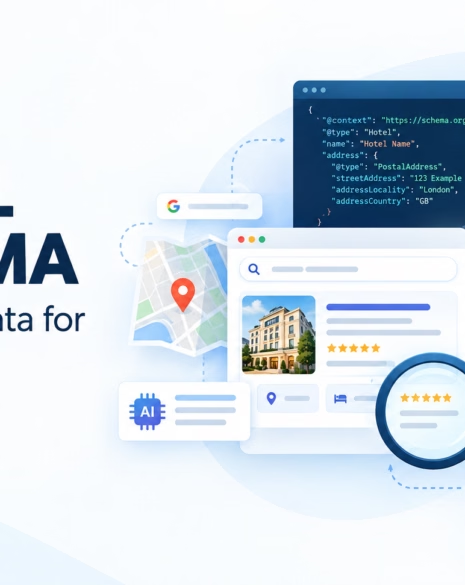
- Schema markup: Ensure usage of Hotel, LocalBusiness, Review, and FAQPage schema types
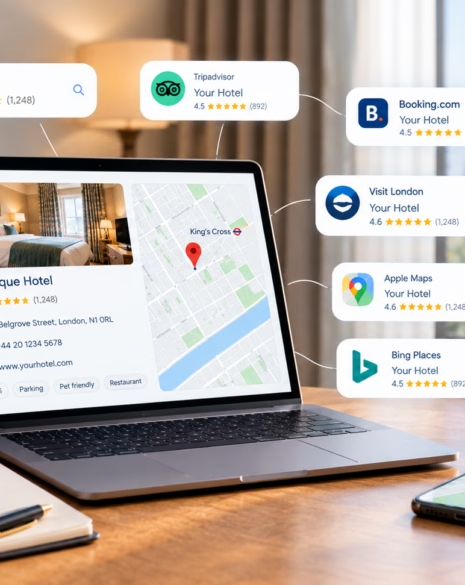
- Entity alignment: Confirm your site defines the hotel as a clear entity with consistent NAP details and corroboration across the web
Use the audit to assess your core pages, such as rooms, dining, and meetings and events, for content depth, technical strength, and structured data.
Step 2: Rebuild Around Real-World Experience
Post-update SEO increasingly favours experience-led content. This means moving beyond generic copy to include firsthand knowledge.
Enhance your content by:
- Featuring genuine staff insights on the local area
- Structuring your local guides around real team tips
- Adding guest questions and answers as structured FAQs
- Using original photography that reflects the authentic guest experience
Every page should demonstrate a real understanding of what it’s like to stay at your hotel.
Step 3: Strengthen Internal Linking and Topic Clarity
Hotel websites often lose ground when content exists in silos. Search engines and AI look for semantic context and topical authority.
Recommended actions:
- Rebuild internal links around topic clusters (e.g. all sustainability content linking to your eco practices)
- Use keyword-informed H2s and natural anchor text
- Publish supporting blog content to reinforce entity signals
Create a content structure that mirrors how users search and explore, by theme, question, and intent.
Step 4: Submit, Monitor, and Iterate
After making updates:
- Re-submit key pages via Google Search Console
- Monitor with tools like GSC, Bing Webmaster Tools, and GA4
- Track individual page performance to identify improvements
Recovery takes time. But by consistently aligning with evolving search priorities, you’ll build more durable visibility.
For specialist help, explore our SEO audit services, designed for hospitality teams.
Conclusion: Recovery Is Realignment
Recovering from an algorithm update isn’t about chasing quick fixes. It’s about refining your site to meet what users and search engines expect: clarity, trust signals, structured information, and genuine experience.
By auditing, aligning, and enriching your content, you’re not just adapting. You’re getting ahead.
Next step: Review your top three landing pages. Do they reflect lived experience, technical clarity, and strong trust signals? If not, now is the time to start rebuilding.