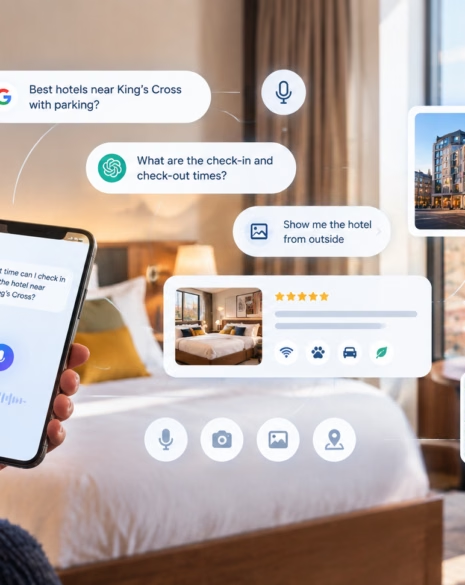
When it comes to hotel visibility in search, your website isn’t the only source that counts. Search engines and AI systems rely on local corroboration, signals from trusted third-party platforms, to verify and elevate your presence. These listings aren’t just references; they serve as validation points.
In today’s AI-led discovery landscape, ensuring your hotel appears accurately and consistently across tourism sites, directories, and travel platforms is key to staying visible.
This guide explores why local corroboration is essential for hotel SEO, how AI uses it to rank properties, and what practical steps you can take to strengthen your presence.
What Is Local Corroboration and Why Does It Matter?
Local corroboration means having your hotel’s key business information: name, address, phone number (NAP), and related details, accurately listed across authoritative third-party websites. These typically include:
- Local tourism boards
- Hospitality associations
- Cultural venues or event partners
- Online travel agencies (OTAs)
- Platforms like Google Maps and Bing Places
When these listings reflect consistent, up-to-date information, they reinforce the credibility of your hotel’s entity in search. That consistency helps search engines form a clearer, more confident understanding of your business, increasing the likelihood of being indexed, ranked, and recommended.
Even small discrepancies in address formatting or naming can create ambiguity, weakening your trust signals and reducing visibility in local search.
How AI and Search Engines Use Corroboration to Rank Hotels
Search engines don’t rely solely on your website. Instead, they assess a web of corroborating data to confirm your hotel’s existence, location, and relevance. This matters across three key areas:
- Entity Understanding
AI systems build “knowledge graphs” that connect your hotel with nearby landmarks, transport links, or events. When your property appears consistently across multiple verified sources, it strengthens your entity recognition and increases confidence in your location data. - AI-Powered Search Results
Models like Google’s Search Generative Experience (SGE) and Bing Chat rely on trustworthy sources to generate answers. If your hotel is listed accurately on tourism boards or mapping platforms, it’s more likely to be included in AI-generated travel suggestions. - Local Pack Rankings
Google’s Local Pack, those map-based results for searches like “eco-friendly hotel near Edinburgh Market”, draws heavily on corroborated business data. Hotels with clean, consistent citations are more likely to feature in these high-visibility spaces.
Where Hotels Should Be Listed — and What to Prioritise
While your Google Business Profile is vital, strong local SEO involves wider coverage. Aim to build out your presence on high-trust, regionally relevant platforms.
Priority citation sources include:
- Local tourism boards like Visit Camden
- Regional business directories and event listings
- Hospitality-focused mapping platforms
- Apple Maps, Bing Places, OpenStreetMap
- Wikidata or other structured data sources
On each listing, ensure your NAP details match your official website exactly. Consistency in punctuation, formatting, and naming matters. Where possible, include links back to your site and ensure descriptions align with your current brand language.
Consistency matters within your own site too: keeping your hotel’s name and location details expressed the same way across core pages, such as your rooms, dining, and meetings pages, reinforces clarity for both users and crawlers.
Strengthen Local SEO with Strategic Corroboration
To boost your hotel’s local authority:
- Audit your citations: Search for variations of your hotel name across common directories and correct outdated or inconsistent entries.
- Build relationships with local organisations: Ask partner venues, institutions, or event organisers to link to your site and cite your hotel accurately.
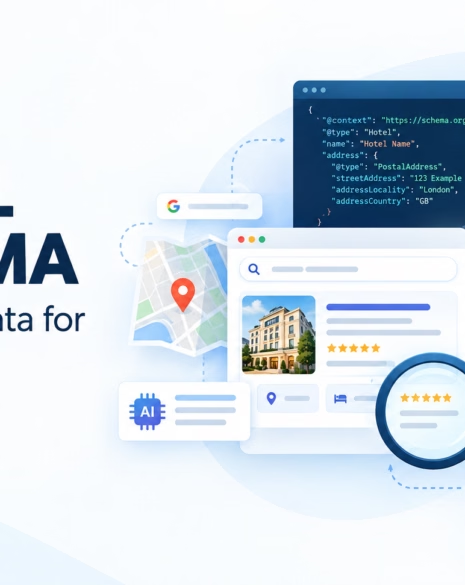
- Use schema markup: Apply LocalBusiness and Hotel schema on your website to clearly communicate structured data about your location, services, and contact details.
- Monitor AI and search features: Check how your hotel appears in AI-generated search results and update listings where necessary to support clearer discovery.
Corroboration isn’t just a technical tactic, it’s part of a long-term visibility strategy that complements your content, on-page SEO, and digital PR efforts.
Conclusion: Build Trust Through Digital Alignment
Your website may be the foundation of your brand online, but it doesn’t work in isolation. Trust is built when your presence is confirmed across the wider web, through accurate, consistent third-party listings that support search engine confidence.
To enhance your visibility in both traditional and AI-driven search:
- Align your NAP details across all major directories
- Focus on authoritative and locally relevant listing platforms
- Use structured data and consistent descriptions across pages
- Leverage partnerships to strengthen your citation network
With a proactive approach to local corroboration, your hotel becomes easier to find, easier to trust, and better positioned to appear in high-impact search results.