Today’s travellers search differently. Whether they’re asking Alexa for hotel recommendations, uploading a screenshot to Google Lens, or scanning video reviews, their journey begins with more than just text. For hotels, that means visibility now hinges on how well your images, videos, and visual content are optimised across platforms. This is where multimodal search comes in, and why it matters for hospitality SEO.
What Is Multimodal Search in Hospitality?
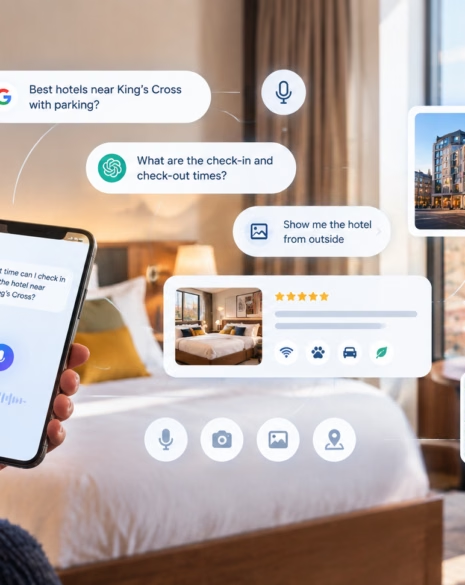
Multimodal search blends different types of input: voice, image, video, and text, into one search experience. It reflects how people naturally explore destinations: seeing a room on Instagram, searching it on Google, and asking a voice assistant for availability.
Search engines and AI systems now interpret these inputs holistically. For hotels, this means your visuals aren’t just decorative, they’re discoverable data. Optimising for hotel image SEO, hotel video SEO, and supporting metadata ensures your content is found and ranked when guests search in modern, multimodal ways.
Why Multimodal Search Optimisation Matters
Visibility Beyond Keywords
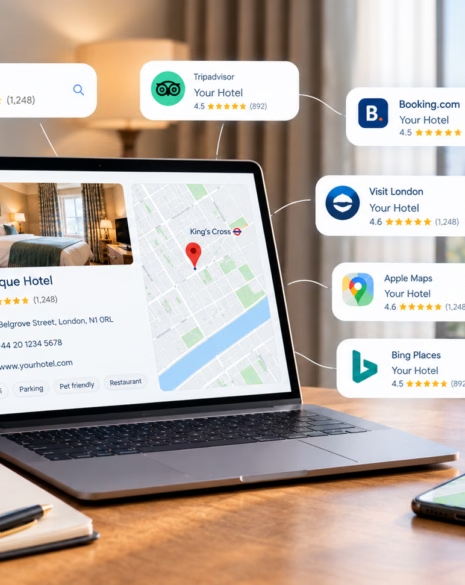
Relying solely on text content undercuts your visibility in AI-led discovery. Google, Bing, and generative platforms increasingly pull visual content, such as images, video thumbnails, social posts, into results. If those assets aren’t tagged correctly, you’re left out of the conversation.
More Engaged, Intent-Driven Audiences
Guests searching via visuals often have higher intent. They’re comparing room layouts, checking amenities, or looking for that exact pool they saw in a video. Optimising your content ensures you’re present in that decision moment, and capturing direct interest.
AI Indexing and Brand Recall
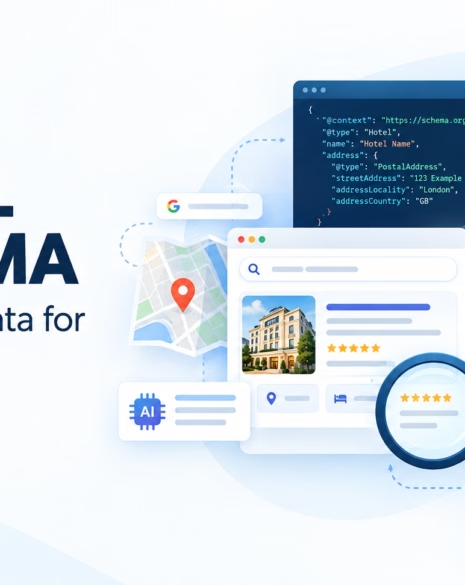
Properly structured visual data supports AI learning. Hotels that consistently mark up content with schema, provide alt text, and use structured file naming build stronger digital identities. This reinforces brand recognition across platforms and devices.
Hotel Image SEO: Best Practices for Visibility
A hotel’s imagery tells its story. But without optimisation, those stories go unheard by AI systems. Here’s how to make sure your hotel images do more than just look good:
- Use descriptive file names that reflect the content (e.g. deluxe-room-balcony-view.jpg instead of IMG_0043.jpg).
- Add detailed alt text to every image. Focus on context and detail, not just keywords.
- Compress images for fast load times without sacrificing quality.
- Use schema markup such as ImageObject to help search engines identify and categorise visuals.
- Ensure mobile responsiveness, as most image searches happen on mobile devices.
For example, if your gallery page includes rooftop bar imagery, mark these with descriptive alt text and add ImageObject schema to reinforce their subject.
Video SEO for Hotels: Making Motion Discoverable
Video content often outperforms static imagery in engagement, but only if search engines can understand it. Here’s how hotels can optimise video:
Use VideoObject Schema
Schema.org’s VideoObject allows you to supply rich metadata like title, description, upload date, and transcript link. This helps Google index and rank your video content in universal and AI results.
Add Captions and Transcripts
Voice-led and visual search tools need text references. Captions, subtitles, and full transcripts boost accessibility and discoverability, especially when embedded directly or linked through schema.
Host Natively Where Appropriate
For property walkthroughs, room tours or dining previews, embedding video directly into your site (with optimised markup) gives you more SEO value than outsourcing visibility to third-party platforms.
Embedding Visual Search into the Booking Funnel
To truly benefit from multimodal optimisation, hotels should integrate visual search features and discovery content into the user journey. Here’s how:
- Curate content hubs that group imagery and video by room type, view, or occasion.
- Use schema markup across galleries and visual guides.
- Link visuals directly to booking paths where applicable.
- Ensure consistency between social content (e.g. Instagram Reels) and site visuals to support recognition across platforms.
If your hotel has a vibrant local area guide with high-res images and walkable maps, make that page discoverable through visual search optimisation. Add structured data and ensure it loads quickly on mobile.
Conclusion: Visuals Are Now Data – Treat Them That Way
Multimodal search isn’t coming, it’s here. Travellers search with images, voice, and even screenshots. Hotels that treat their visual content as structured, searchable data will lead the conversation.
Audit your current visual assets. Add schema. Write descriptive metadata. Then align your image and video content with the guest’s journey, not just your aesthetic.
Want support optimising your gallery, video content or on-site visuals for discoverability? Speak to our team about a full audit.